

Writing a blog post is not only about sharing information. It is about presenting that information in a way that holds attention from beginning to end. Many articles lose readers within the first few paragraphs because they lack clarity or flow. Learning how to structure a blog post that keeps readers engaged is essential for improving readability, increasing time on page, and strengthening search engine performance.
An effective structure guides readers smoothly while maintaining focus on the topic. It reduces confusion and makes content easier to absorb.
Start with a Clear and Relevant Introduction
The introduction sets expectations. Readers should quickly understand what the article covers and why it matters. Avoid long background explanations that delay the main point. Instead, briefly address the problem or question your audience has.
When you structure a blog post that keeps readers engaged, the opening should create relevance. A strong introduction can include a relatable scenario, a clear benefit, or a concise statement about what the reader will learn. This helps establish direction and encourages readers to continue.
Clarity in the first section often determines whether someone stays or leaves.
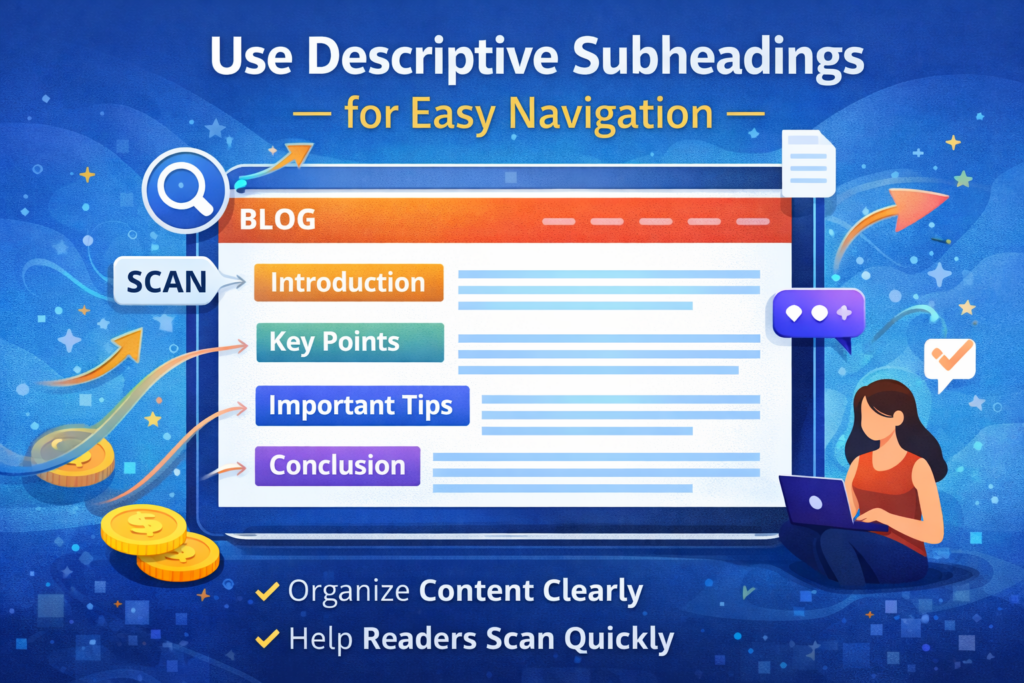
Online readers rarely read word by word. They scan first. Subheadings act as visual signposts that guide them through the content. Each subheading should clearly describe what the following section covers.
To effectively structure a blog post that keeps readers engaged, organize ideas into logical sections. Avoid large blocks of uninterrupted text. Instead, break the content into focused segments that address one main idea at a time.
Well-written subheadings also improve search engine optimization by reinforcing key topics and helping search engines understand the article’s hierarchy.
Keep Paragraphs Focused and Concise
Long paragraphs can overwhelm readers, especially on mobile devices. Short to medium-length paragraphs improve readability and reduce fatigue. Each paragraph should focus on a single idea or supporting point.
When aiming to structure a blog post that keeps readers engaged, consider how the content appears visually. White space increases readability and makes the article feel approachable. Even complex topics become easier to understand when broken into manageable sections.
Bullet points or numbered lists can also help present information clearly, particularly when outlining steps or key takeaways.
Maintain Logical Flow Between Sections
Engagement depends on flow. Each section should connect naturally to the next. Avoid abrupt topic changes that disrupt continuity. Transitional sentences help maintain coherence and guide readers smoothly through the argument or explanation.
To properly structure a blog post that keeps readers engaged, outline your main points before writing. A clear structure prevents repetition and keeps the article aligned with its purpose. Logical progression makes content feel organized and professional.
Readers are more likely to finish an article that feels structured rather than scattered.
End with a Strong Conclusion

A conclusion should reinforce the key message without introducing new major points. It summarizes the discussion and provides closure. This is also an opportunity to restate the value delivered in the article.
When you structure a blog post that keeps readers engaged, the ending should feel complete and purposeful. A concise summary or practical takeaway encourages reflection and can motivate further action, such as exploring related content or applying the advice shared.
Avoid abrupt endings that make the article feel unfinished.
Final Thoughts
Effective blog structure is not about rigid formulas. It is about clarity, flow, and reader experience. A well-structured post makes information easier to understand, improves engagement metrics, and strengthens overall content performance.
From crafting a relevant introduction to organizing clear subheadings and maintaining logical flow, structure plays a central role in content success. By focusing on readability and organization, writers can create articles that hold attention and deliver value consistently.