
Running an online store today is not just about listing products and waiting for customers. Competition is strong, and organic reach alone often isn’t enough to generate consistent sales. This is where Facebook Ads for E-commerce become relevant. With billions of active users across Facebook and Instagram, the platform offers powerful targeting tools that help businesses reach specific audiences.
For beginners, the process may look technical at first. However, once you understand the structure and purpose behind campaigns, it becomes manageable and data-driven.
Understanding How Facebook Ads Work
At its core, Facebook advertising works through an auction system. Advertisers compete to show their ads to users based on targeting criteria, budget, and ad quality. The platform evaluates engagement potential along with bid amount, meaning a well-designed ad can compete effectively even with moderate budgets.
When using Facebook Ads for E-commerce, the main goal is typically conversions. This means encouraging users to complete actions such as purchasing a product, adding items to a cart, or signing up for offers. To track these actions properly, businesses must install the Meta Pixel on their website. This tracking tool collects user behavior data, helping optimize campaigns over time.
Setting Up a Campaign the Right Way
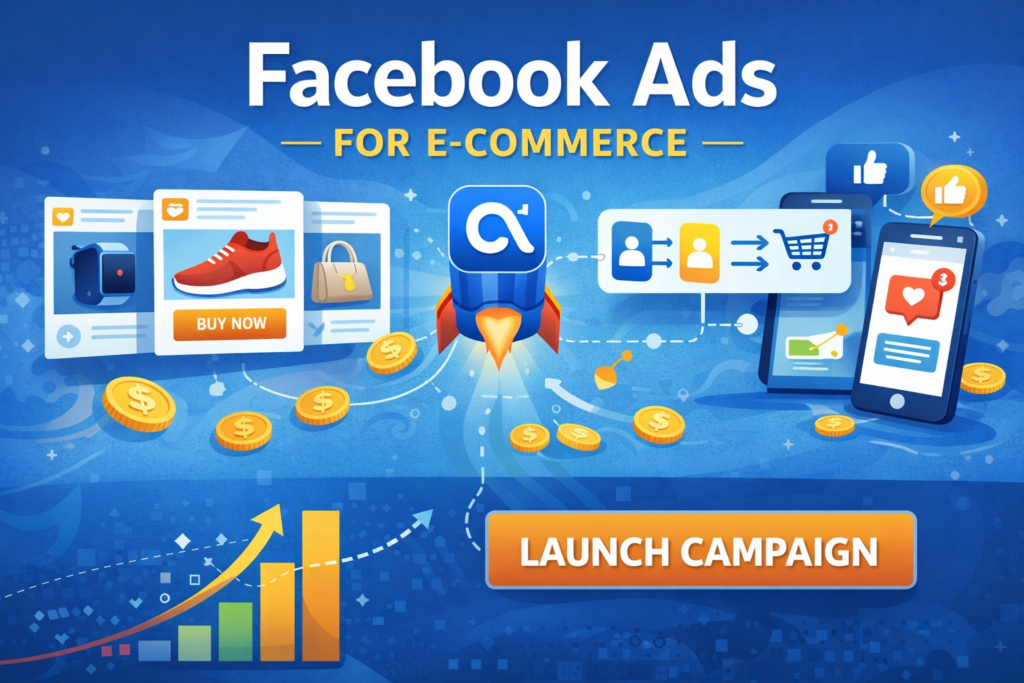
A beginner-friendly campaign usually starts with a clear objective. Meta Ads Manager offers multiple objectives such as awareness, traffic, engagement, and conversions. For online stores, conversion-focused campaigns tend to deliver better results because they optimize for purchases rather than clicks alone.
Successful Facebook Ads for E-commerce also require structured audience targeting. Advertisers can target users based on demographics, interests, behaviors, and previous website interactions. Retargeting is especially valuable. It allows businesses to show ads to users who visited the website but did not complete a purchase.
Starting with a small test budget helps identify which audience segments respond best before scaling.
Creating Effective Ad Creatives
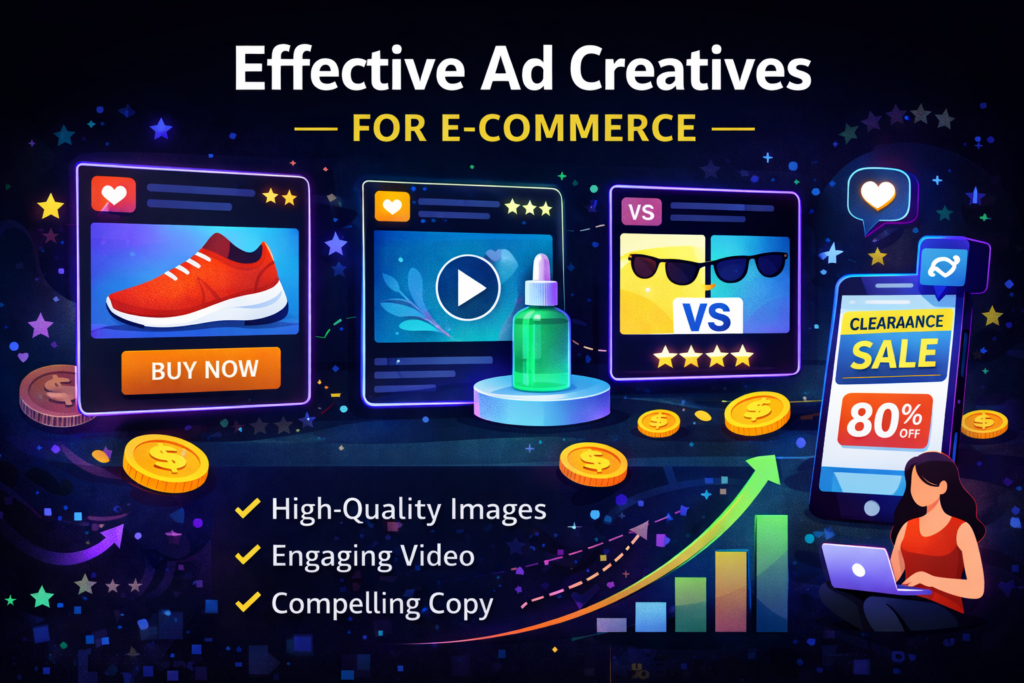
Ad creatives significantly influence campaign performance. Clear product images, short videos, and concise copy often perform better than overly complex designs. The goal is to highlight product benefits quickly and encourage action.
For beginners exploring Facebook Ads for E-commerce, it is important to test different variations. This might include changing headlines, images, or call-to-action buttons. Small adjustments can lead to noticeable performance differences. Monitoring metrics such as click-through rate and conversion rate helps determine which version works best.
Budgeting and Performance Tracking
Budget management is essential for sustainable advertising. Instead of spending large amounts immediately, beginners should focus on controlled testing. Daily budgets allow flexibility while collecting performance data.
Tracking metrics is equally important. Key indicators include cost per click, cost per acquisition, return on ad spend, and conversion rate. These numbers provide insights into profitability and campaign efficiency. Many businesses realize that effective Facebook Ads for E-commerce depend more on continuous optimization than on high budgets.
Adjusting audiences, refining creatives, and improving landing pages all contribute to better long-term performance.
Common Mistakes to Avoid
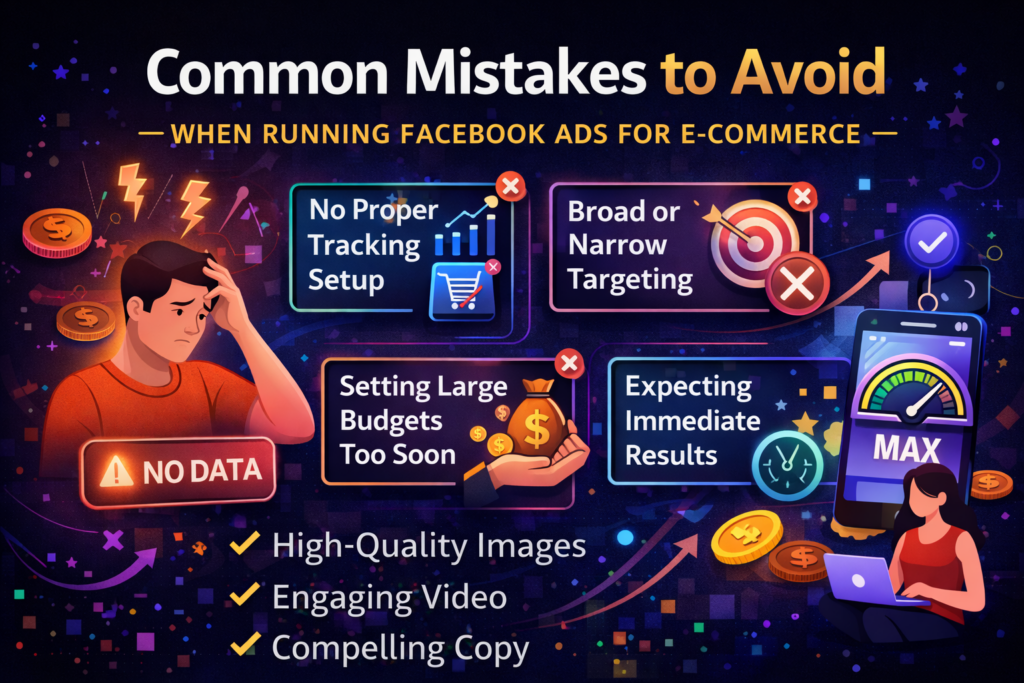
Beginners often make similar mistakes when launching campaigns. Running ads without proper tracking setup is one of them. Without data, optimization becomes guesswork. Another common issue is targeting audiences that are too broad or too narrow, limiting reach or wasting budget.
Patience is also necessary. Results may take time, especially while the algorithm gathers data. Those using Facebook Ads for E-commerce successfully understand that advertising is an ongoing process rather than a one-time setup.
Final Thoughts
Facebook advertising provides scalable opportunities for online stores of all sizes. With structured targeting, creative testing, and performance tracking, beginners can gradually build profitable campaigns. The platform rewards strategic planning and consistent optimization.
For e-commerce businesses seeking visibility and sales growth, understanding how to use Facebook advertising effectively is a valuable skill. When approached methodically, it becomes a measurable and adaptable marketing channel.